
BANDUNG — On a cool Friday morning (31 October 2025), the air in Cihideung felt fresh as we stepped into the Rumah Karya Kopmu–DT (RKK) building.
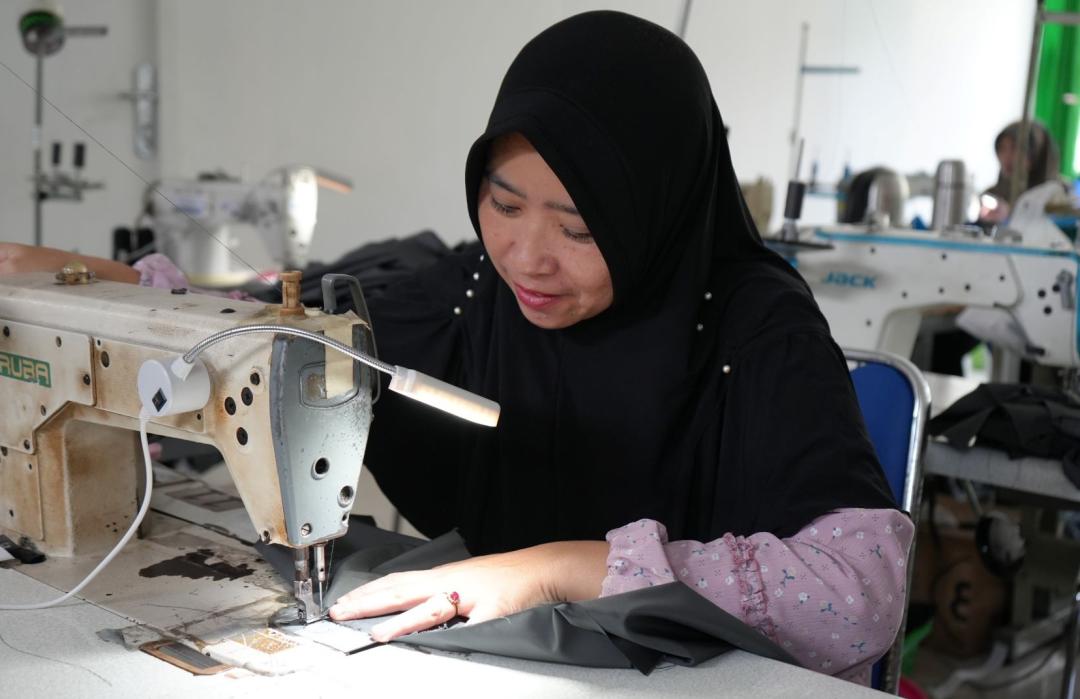
The first room serves as a product exhibition space, adjacent to the marketing and sales room. Further inside, the cutting and pattern-making area was bustling with activity, while on the second floor, the rhythmic hum of sewing machines echoed like the heartbeat of hope growing day by day.
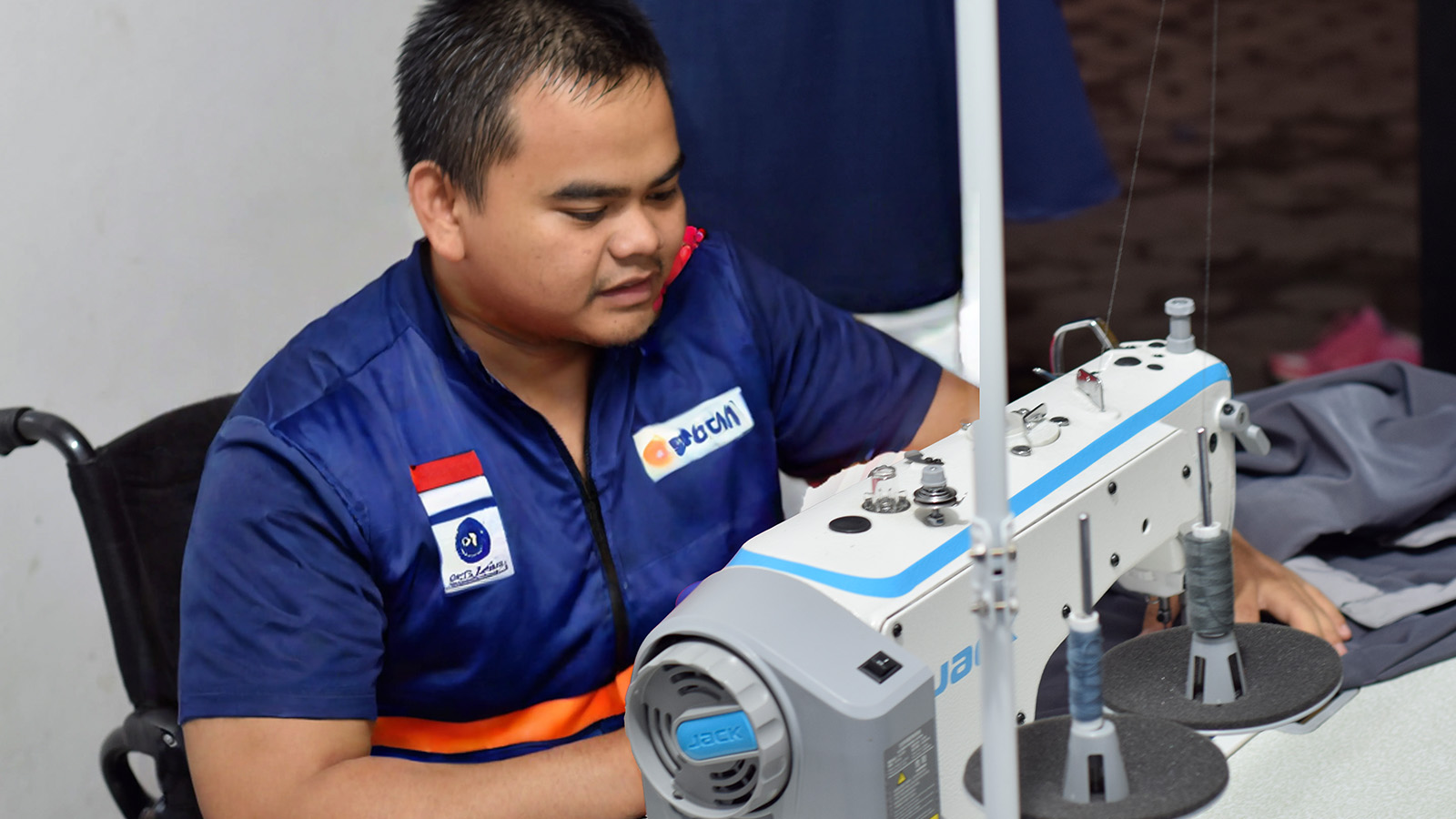 Pastel-coloured fabrics lay neatly across worktables, moved by the steady hands of women who worked with focus and precision. At a glance, it looked like an ordinary production room. But the deeper one walked, the clearer it became that behind every stitch and every thread, there were lives being pieced back together.
Growing and Learning
Many of the women began their journey here through simple stories — an invitation from a friend, a recommendation from a relative, or a small opportunity that appeared just when they needed a new direction.
Yeti, for example, came after being invited by a friend, Bu Nia. She never imagined that such a simple invitation would change her life.
“I used to only know basic sewing, but now my skills have grown. I used to have no activities at home. After joining the training, now I have work, I have projects. I’m proud that I can earn my own income,” said Yeti, who was previously a housewife with no income.
She now works on various projects with earnings ranging from IDR 200,000 to 500,000 per project.
A similar experience was shared by Nia, who used to do simple sewing at home. “Alhamdulillah, after joining the training, I’ve learned so much more,” she said. She now understands many clothing models and techniques. The impact is felt directly in her household economy. “Economically, after receiving sewing projects, Alhamdulillah it really helps increase my income.”
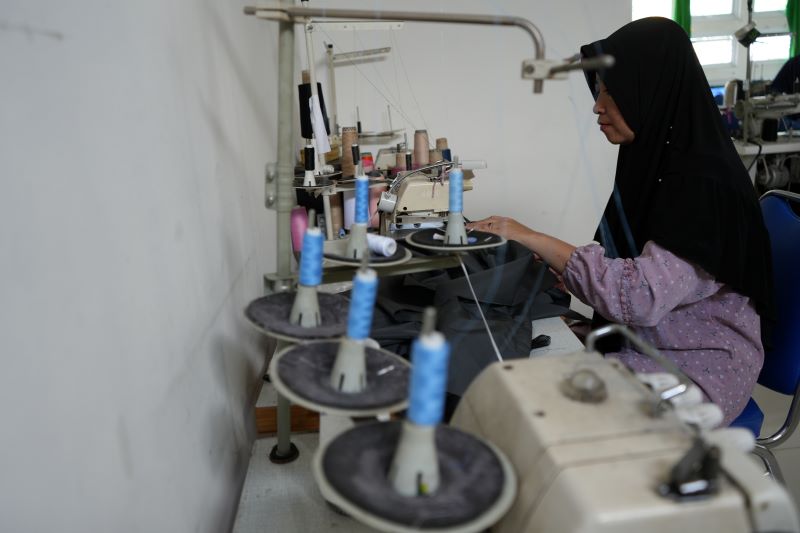 Heni, another participant, used to go from factory to factory looking for sewing orders that often didn’t come. “Since I wasn’t getting any orders, I decided to join this training,” she said. She now has new skills — from making tunics to jackets. “I hope we keep receiving many orders so we can continue working,” Heni added.
Efi, who previously worked in a garment factory, also experienced significant improvement after joining the training from the beginning. “Things I couldn’t do before, now I can,” she said. She can now make jackets, t-shirts, and shirts. The income she earns from RKK sewing projects helps support her children’s needs. “It’s not regular every month, but Alhamdulillah, it really helps,” she said.
A different journey was taken by Wini Wahyuni, known as Teh Wini, the RKK coordinator. She joined during the early phases of the Paradaya training program. Although she previously ran her own small business, life challenges led her to seek a new space to grow. “I joined the training to gain more skills and capital for my business,” she shared.
A Warm Ecosystem for a Brighter Future
As the coordinator, she manages workflow, oversees incoming and outgoing goods, helps participants who face difficulties, and still sews alongside them.
“This income may not be big, but it helps us live. I’m very grateful. But I won’t leave RKK. This place has helped me so much,” Wini said. She hopes to rebuild her own business one day.
In this space, the relationships built are not just between workers and sewing machines — but a supportive ecosystem. New participants learn from seniors, borrow tools, ask about patterns, and share sewing tips. There is a warmth that makes everyone feel welcomed and valued.
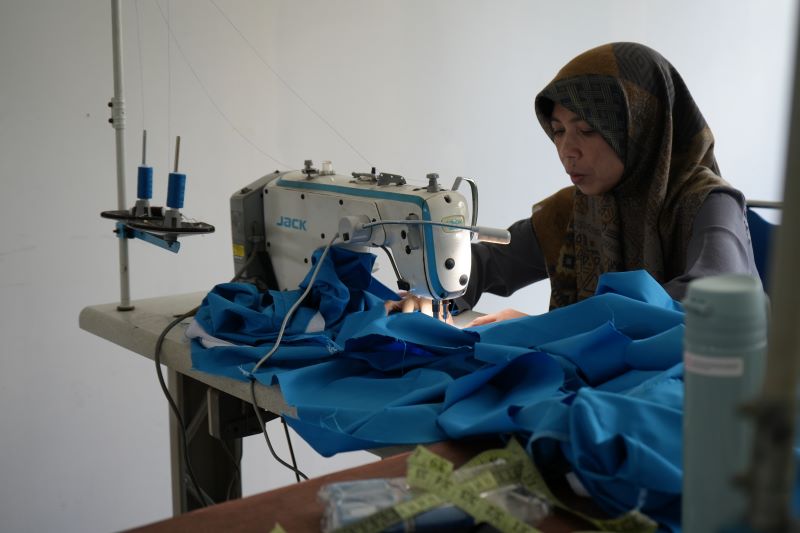 Although projects do not always come regularly, the participants share the same hope: “We hope the orders keep coming, so we can continue working.”
Their gratitude is sincere: “Thank you to DT Peduli and KOPMU,” said Yeti. Similar appreciation came from Nia, Efi, and Heni — all acknowledging the valuable skills and income they gained. “May this program continue to benefit others.”
At the end of the visit, Bambang Hermanto, Marketing PIC of Rumah Karya KOPMU–DT, emphasized that RKK is part of DT Peduli’s empowerment initiatives operated by Kopmu. The program aims to create opportunities, strengthen skills, and provide decent work for communities — especially women striving to rise again.
For them, RKK is not just a sewing space. It is a place where courage is rebuilt, confidence is restored, and a brighter future is carefully stitched together — one thread at a time.
Editor: Agus ID